


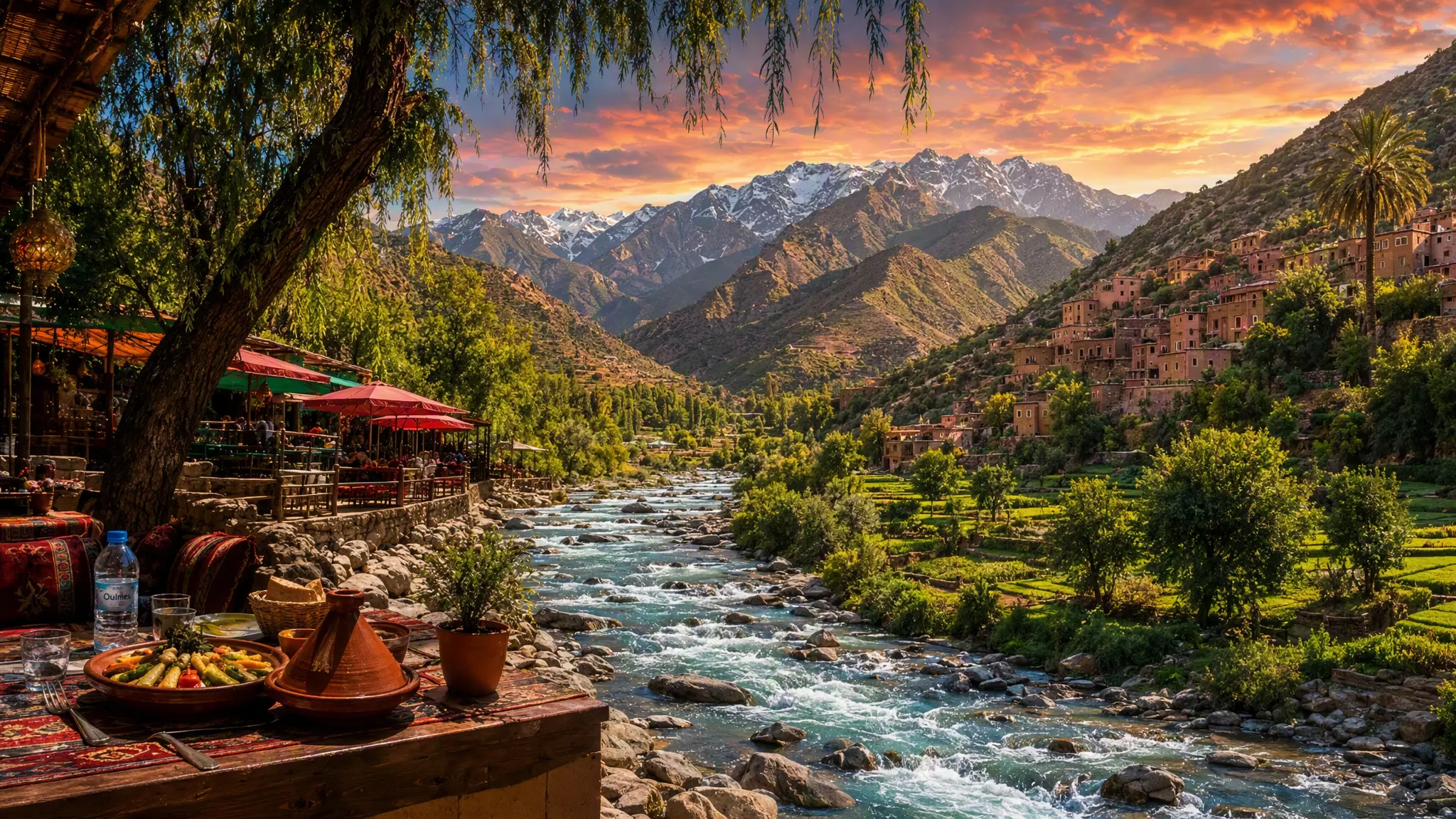
When Marrakech feels fast and sun-warmed, the Ourika Valley offers an easy change of rhythm. South-east of the city, the road gradually leaves the plains for red-earth villages, terraced fields, walnut trees, and the first foothills of the High Atlas. It is one of the most rewarding day trips from Marrakech because the journey itself is part of the experience: the scenery changes steadily, the air often feels cooler, and there is time for a long lunch beside the river.
This guide helps you plan a relaxed and respectful visit, whether you want a scenic drive, a short walk around Setti Fatma, a family-friendly lunch, or a fuller day in the mountains.
Why visit the Ourika Valley?
Ourika is not a single attraction but a valley of small stops and changing landscapes. It is loved for its accessibility from Marrakech, the contrast between city and mountains, and the chance to see everyday life in villages shaped by the seasons. In spring, the valley is especially green; in warmer months, the riverbanks and shade make it a welcome escape; and in cooler weather, the mountain views become especially clear.
Go with the right expectation. This is a popular excursion, especially on weekends and holidays, so the most enjoyable day is not about racing from stop to stop. Choose a few meaningful moments, leave room for tea or lunch, and let the valley set the pace.
Getting there from Marrakech
The drive commonly takes around one hour to one and a half hours, depending on your Marrakech pickup point, traffic, and how far up the valley you travel. A private driver or organised excursion is the simplest choice if you want to relax and make a few stops. It is also practical if you plan to return later in the afternoon, when the mountain roads are less familiar.
Independent travellers can hire a car, but should agree on a clear route and parking plan before leaving Marrakech. If you use a taxi or driver for the day, confirm the total duration, waiting time, stops, and return journey in advance. Public transport can work for confident, flexible travellers, but it is less convenient for reaching the upper valley and returning on your own timetable.
A simple itinerary for a memorable day
Morning: leave early and enjoy the road
An early departure gives you cooler temperatures and more space at the popular stops. Pause at a viewpoint only when it is safe to do so, and treat any shopping stop as optional. The best guides and drivers make room for what interests you rather than turning every stop into a sales visit.
Late morning: villages and local crafts
The valley is home to Amazigh (Berber) communities. A short village walk with a local guide can add real context to the landscape, introducing traditional building methods, gardens, and seasonal routines. If you visit a women’s argan cooperative, ask how products are made and priced, and buy only if the quality and story feel right for you.
Midday: riverside lunch
A long lunch beside the water is one of Ourika’s signature pleasures. Many restaurants serve Moroccan salads, tagines, grilled dishes, and mint tea on terraces close to the river. Choose a place with sturdy seating, clear prices, and a calm setting; in busy periods, a restaurant slightly away from the main cluster can be more relaxing. Keep an eye on children near fast water and do not expect the river to be warm.
Afternoon: Setti Fatma and the waterfalls
Setti Fatma is the best-known upper-valley stop and the starting point for walks towards small waterfalls. The first sections can be manageable for active visitors, but the trail is uneven, rocky, and sometimes slippery. It is not a casual flip-flop walk. Wear shoes with grip, carry water, and be honest about your confidence on rough ground. A local guide can be useful, especially after rain or when you want help choosing a route that matches your ability.
There is no need to prove anything by reaching every waterfall. A short walk, a shaded tea break, and a safe return can be just as satisfying. In high season, start the walk earlier or enjoy another quieter stretch of the valley instead.
What to wear and bring
- Layers: Marrakech may be warm while the upper valley feels cool, particularly in the morning or near water.
- Walking shoes: closed shoes with grip are essential if you plan to walk around Setti Fatma.
- Sun protection: sunglasses, sunscreen, and a hat remain useful even in the mountains.
- Water and small cash: take drinking water, personal medication, and cash for small purchases or tips.
- A light rain layer: valuable in the shoulder seasons, when weather can change quickly.
Travel respectfully
Ourika is a living valley, not a theme park. Ask before photographing people, dress with consideration when walking through villages, and keep your group’s noise low near homes and farms. Buy local crafts directly and thoughtfully, use marked paths where possible, and take your rubbish back with you. These small choices help protect the landscapes and communities that make the trip special.
Is the Ourika Valley worth a day from Marrakech?
Absolutely, if you want a softer, greener counterpoint to Marrakech. The valley works best for travellers who value scenery, food, culture, and a little fresh mountain air more than a tightly scheduled checklist. Plan a few good stops, wear the right shoes if you want to walk, and leave some unscripted time for the river, the views, and a cup of mint tea. That is when Ourika feels less like an excursion and more like a genuine pause in your Morocco journey.